
An application manages session identifiers in an insecure manner, making them susceptible to reuse by threat actors. Session identifiers are crucial for maintaining a user's authenticated session. If an application permits the reuse of a session identifier, a threat actor could trick a victim into logging in with a session identifier they already control. Once the victim successfully logs in, the threat actor can use that same session identifier to hijack the authenticated session and impersonate the legitimate user.
Clone this current repo recursively
git clone --recurse-submodules https://github.com/qeeqbox/session-fixationRun the webapp using Python
python3 session-fixation/vulnerable-web-app/webapp.pyOpen the webapp in your browser 127.0.0.1:5142
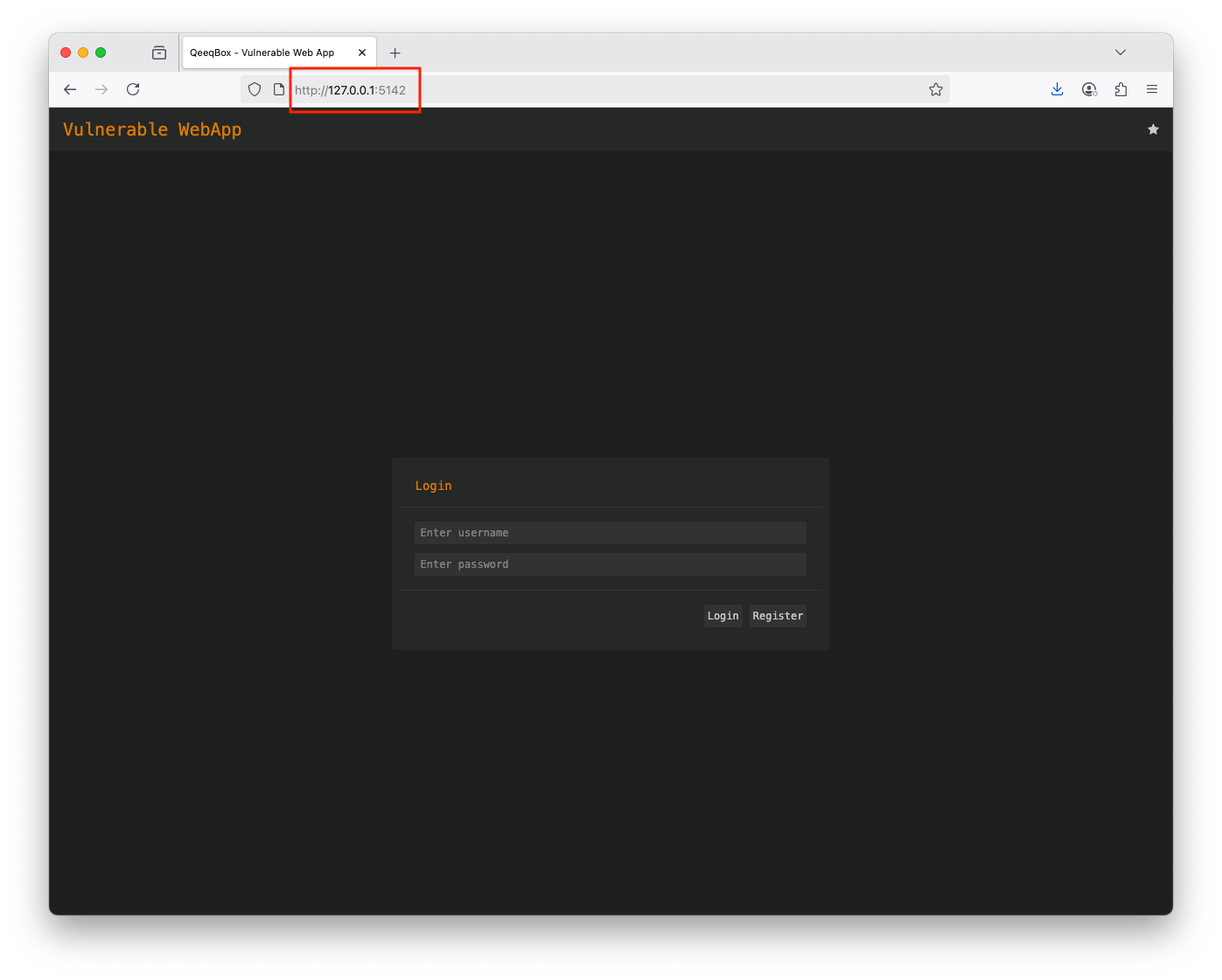
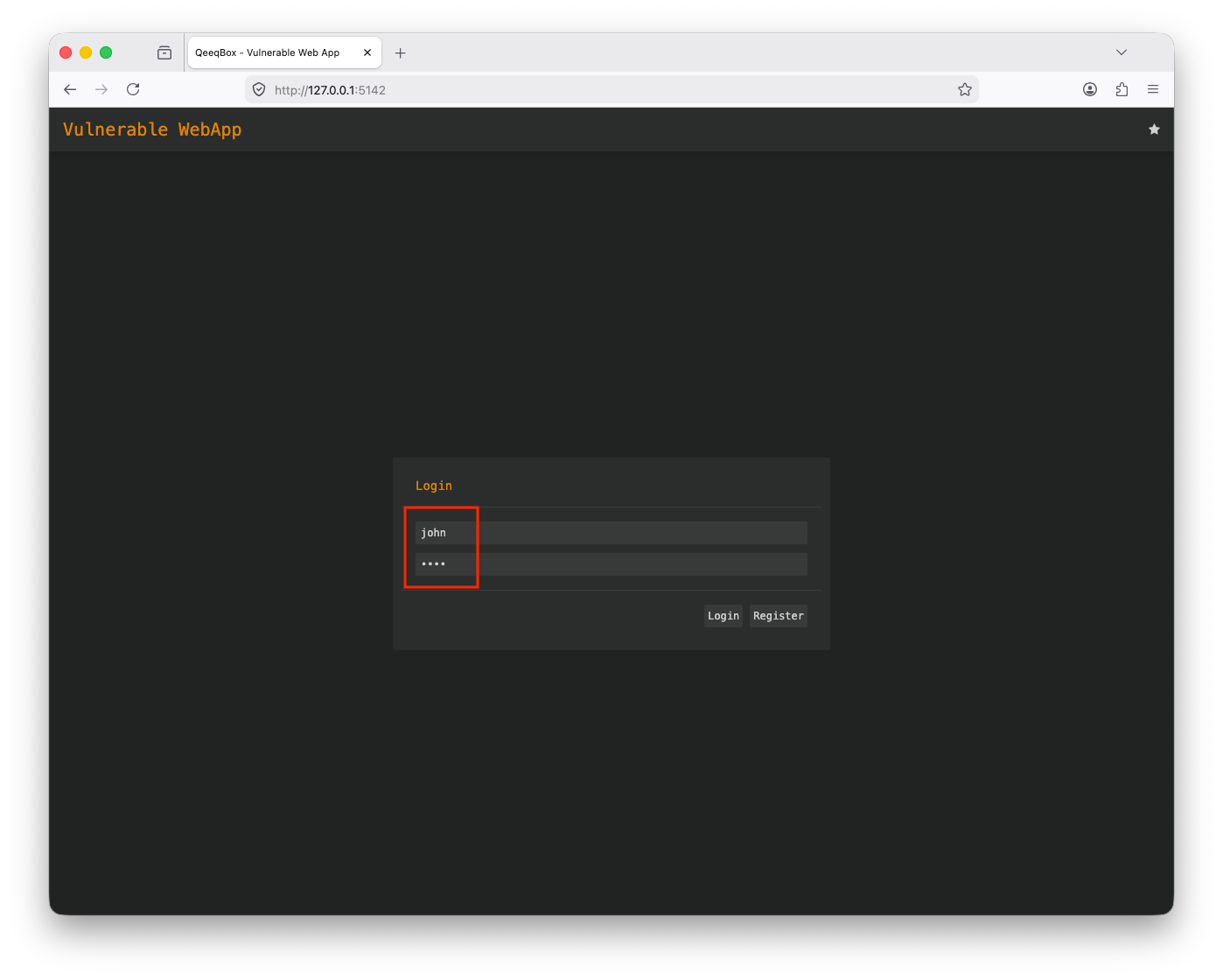
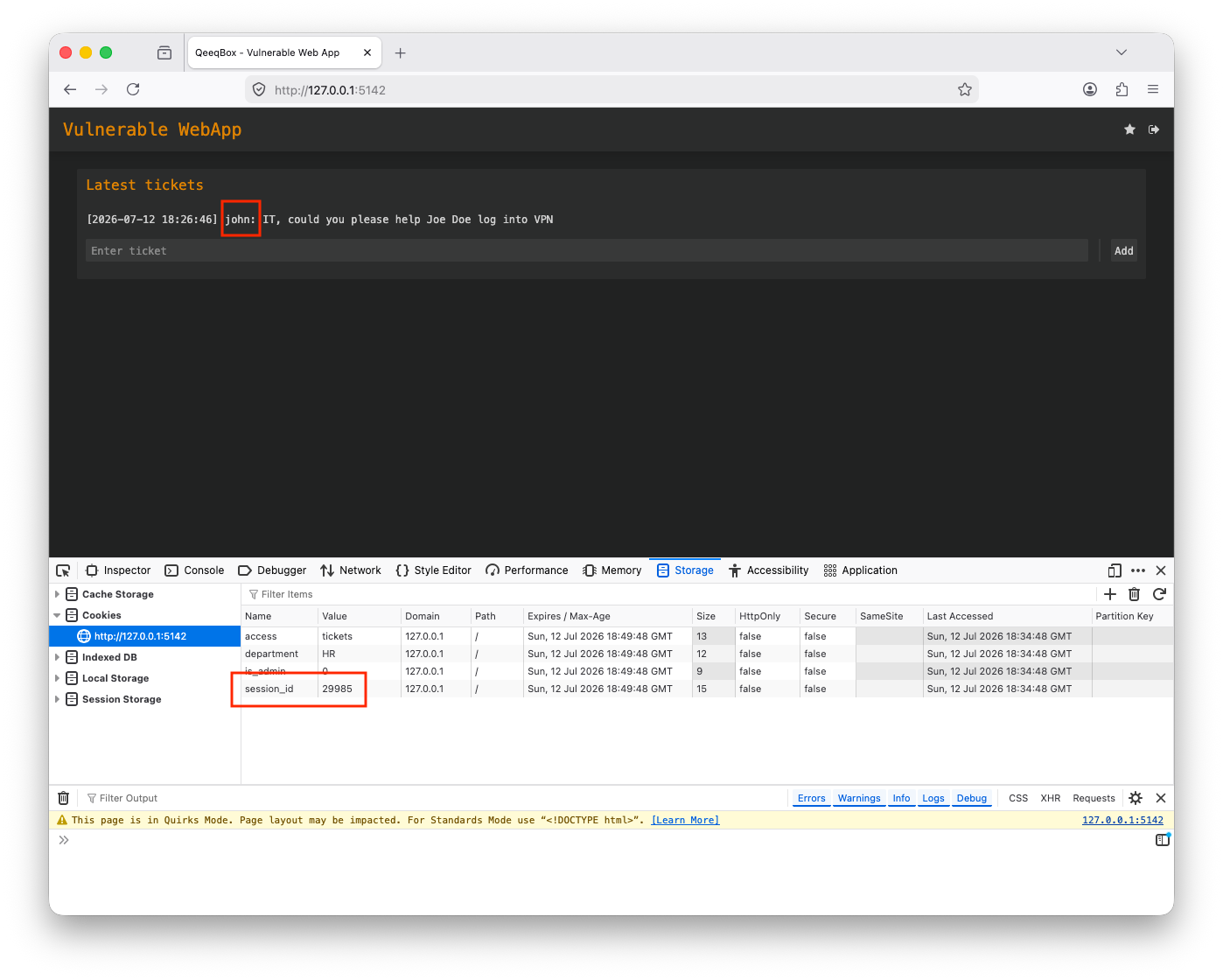
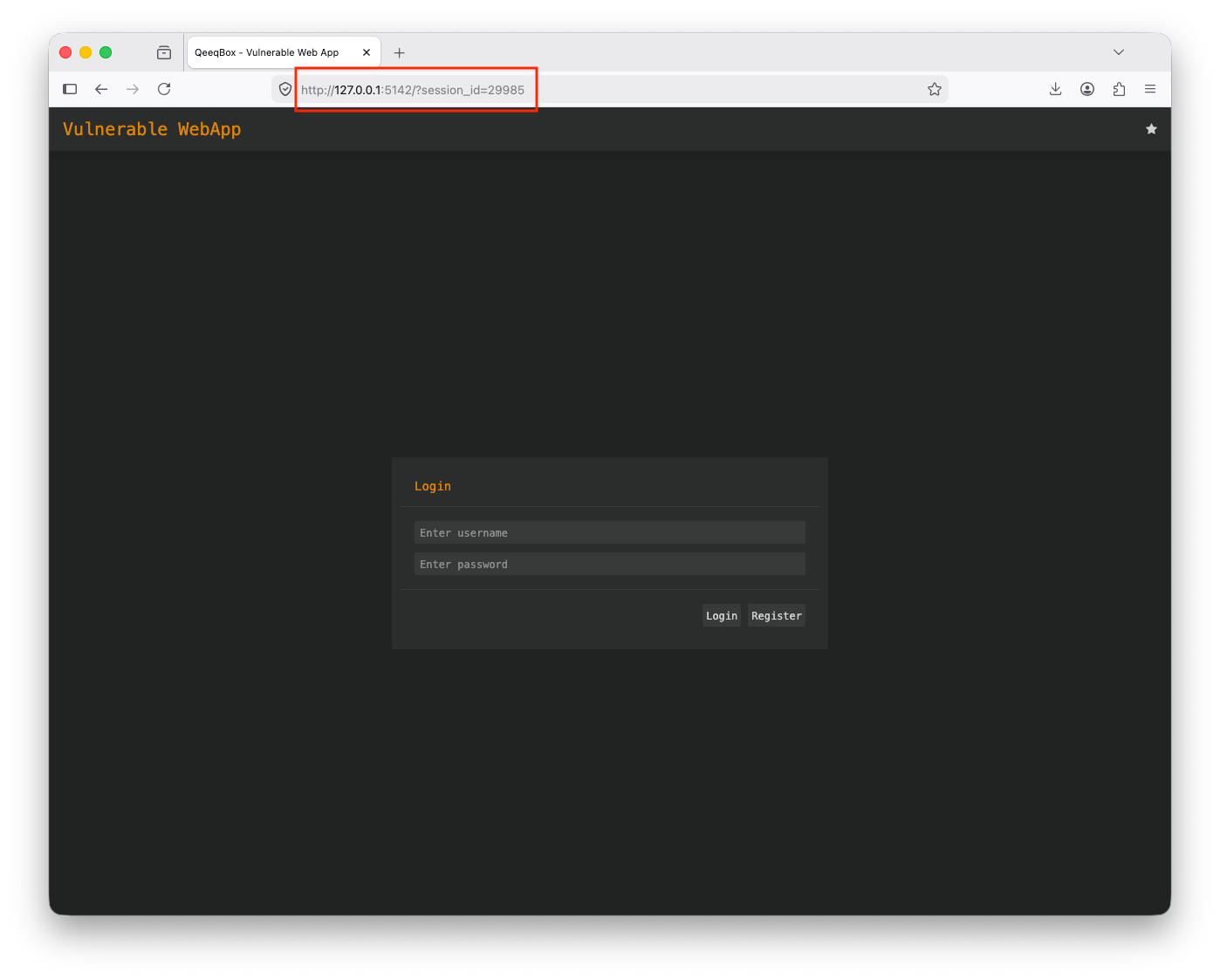
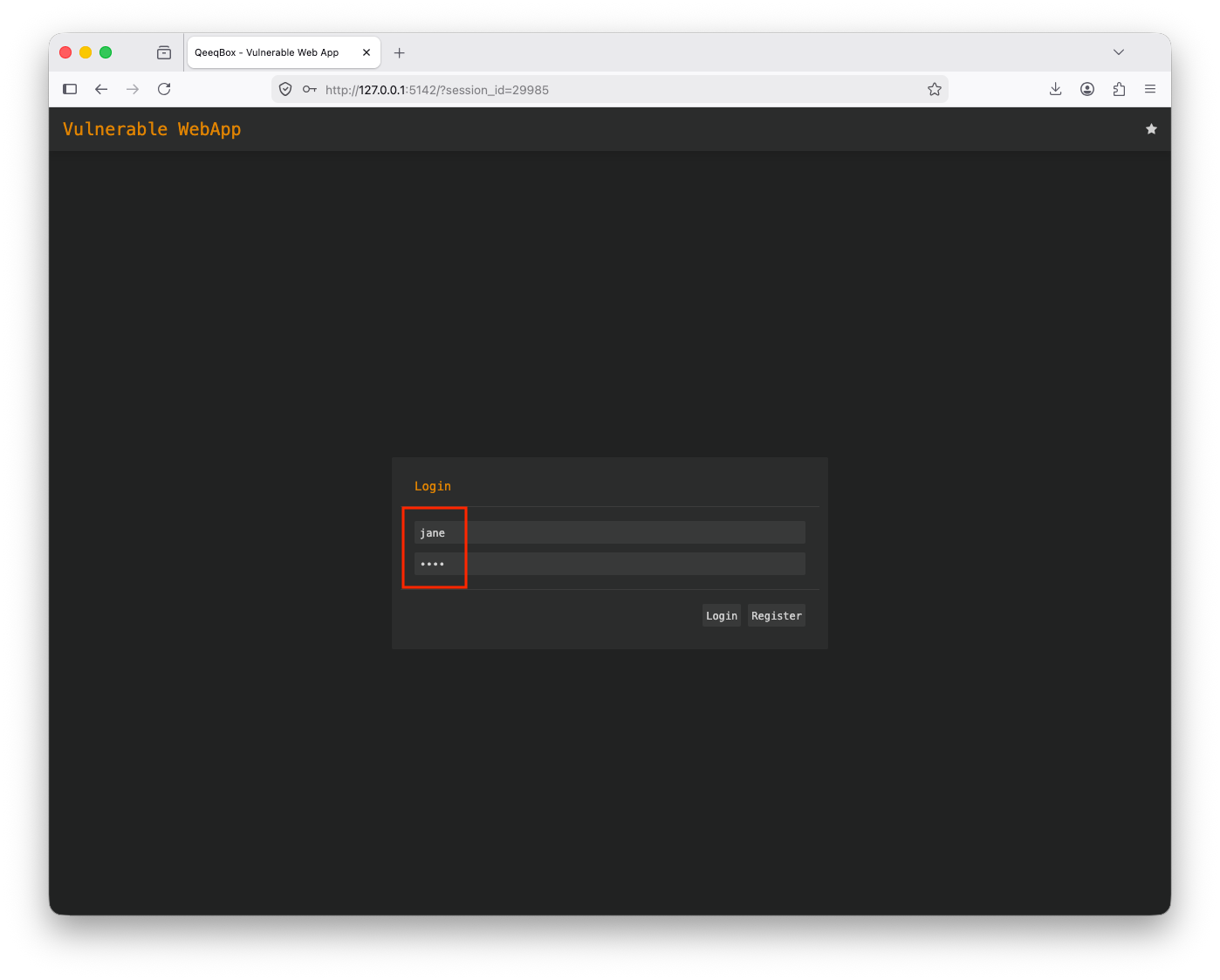
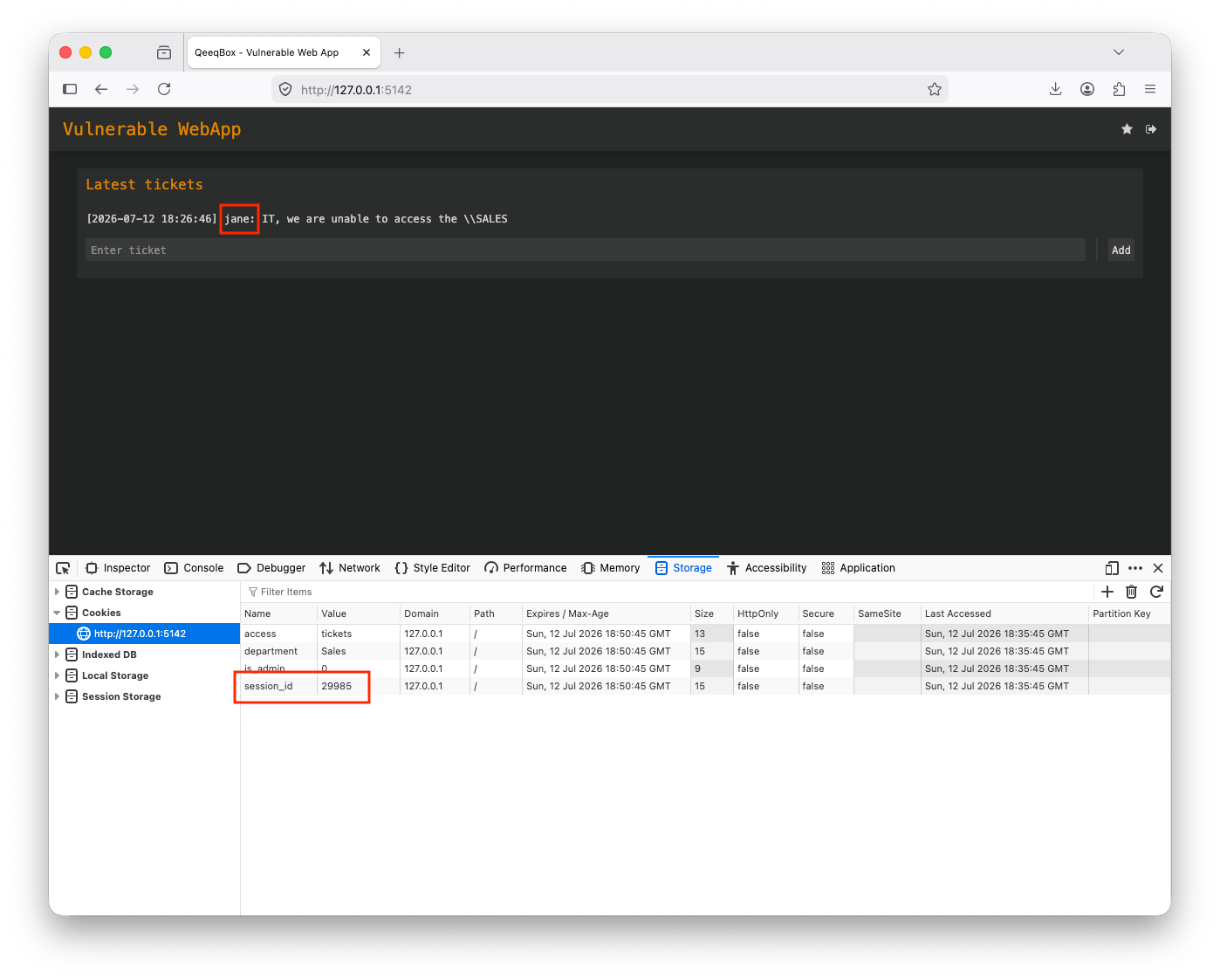
When a user logs in to the page, the parameters like session_id are passed to the gen_cookie() function
def do_POST(self):
    parsed_url = urllib_parse.urlparse(self.path)
    post_request_data_length = int(self.headers.get('content-length'))
    post_request_data = urllib_parse.parse_qs(str(self.rfile.read(post_request_data_length),"UTF-8"))
    query_request_data = urllib_parse.parse_qs(parsed_url.query)
    self.session = self.check_logged_in()
    if parsed_url.path == "/login" and "username" in post_request_data and "password" in post_request_data:
        ret = self.check_creds(post_request_data['username'][0],post_request_data['password'][0])
        if isinstance(ret, list) and ret[0] == "valid":
            self.send_content(302, self.gen_cookie(ret[1],60*15,query_request_data)+[('Location', URL)], None)
            self.log_message("%s logged in" % post_request_data['username'][0])
            return
        elif isinstance(ret, list) and ret[0] == "password":
            if "debug" in post_request_data:
                if post_request_data["debug"][0] == "1":
                    self.send_content(302, self.gen_cookie(ret[1],60*15,query_request_data)+[('Location', URL)], None)
                    self.log_message("%s logged in" % post_request_data['username'][0])
                    return
            self.send_content(401, [('Content-type', 'text/html')], self.msg_page(f"Password is wrong".encode("utf-8"), b"login"))
            return
        elif isinstance(ret, list) and ret[0] == "username" or isinstance(ret, list) and ret[0] == "error":
            self.send_content(401, [('Content-type', 'text/html')], self.msg_page(f"User {post_request_data['username'][0]} doesn't exist".encode("utf-8"), b"login"))
            return
The gen_cookie() function sets up the session_id with one passed from the request parameters if it exists
    def gen_cookie(self, row, max_age, query):
        session_id = None
        cookies = SimpleCookie(self.headers.get('Cookie'))
        if 'session_id' in query:
            session_id = query['session_id'][0]
        elif 'session_id' in cookies:
            session_id = cookies['session_id'].value
        else:
            session_id = "".join(str(randint(1, 9)) for _ in range(5))
        #end_time = datetime.now() + timedelta(days=1)
        SESSIONS[session_id] = {"username":row[1], "department": row[3],"access":row[4], "is_admin":row[5]}
        cookie1 = SimpleCookie()
        cookie1['session_id'] = session_id
        cookie1['session_id']['path'] = '/'
        cookie1['session_id']['max-age'] = max_age
        cookie2 = SimpleCookie()
        cookie2['is_admin'] = row[5]
        cookie2['is_admin']['path'] = '/'
        cookie2['is_admin']['max-age'] = max_age
        cookie3 = SimpleCookie()
        cookie3['access'] = row[4]
        cookie3['access']['path'] = '/'
        cookie3['access']['max-age'] = max_age
        cookie4 = SimpleCookie()
        cookie4['department'] = row[3]
        cookie4['department']['path'] = '/'
        cookie4['department']['max-age'] = max_age
        cookies = [('Set-Cookie', cookie1.output(header='', sep='')),('Set-Cookie', cookie2.output(header='', sep='')),('Set-Cookie', cookie3.output(header='', sep='')),('Set-Cookie', cookie4.output(header='', sep=''))]
        return cookies