SecureNode helps enterprises and platforms improve call trust by showing verified identity information (brand name, optional logo, optional call context) directly on the recipient’s device when a call is received.
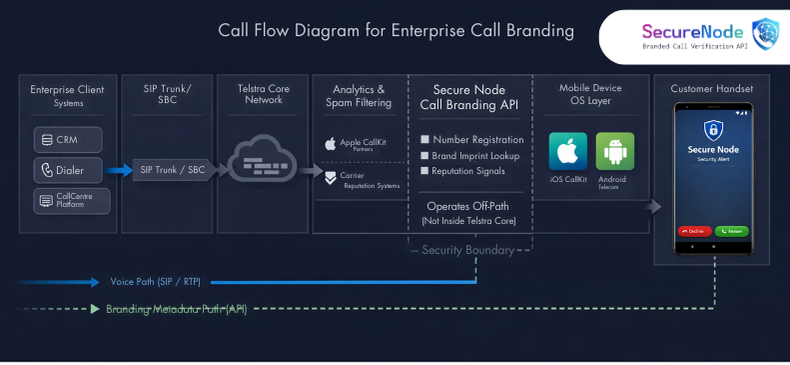
SecureNode operates outside the carrier and SIP voice path:
- Calls are still routed by your existing carrier/CPaaS stack.
- SecureNode does not route calls or process call audio.
- Branding is applied at the device level using native mobile capabilities.
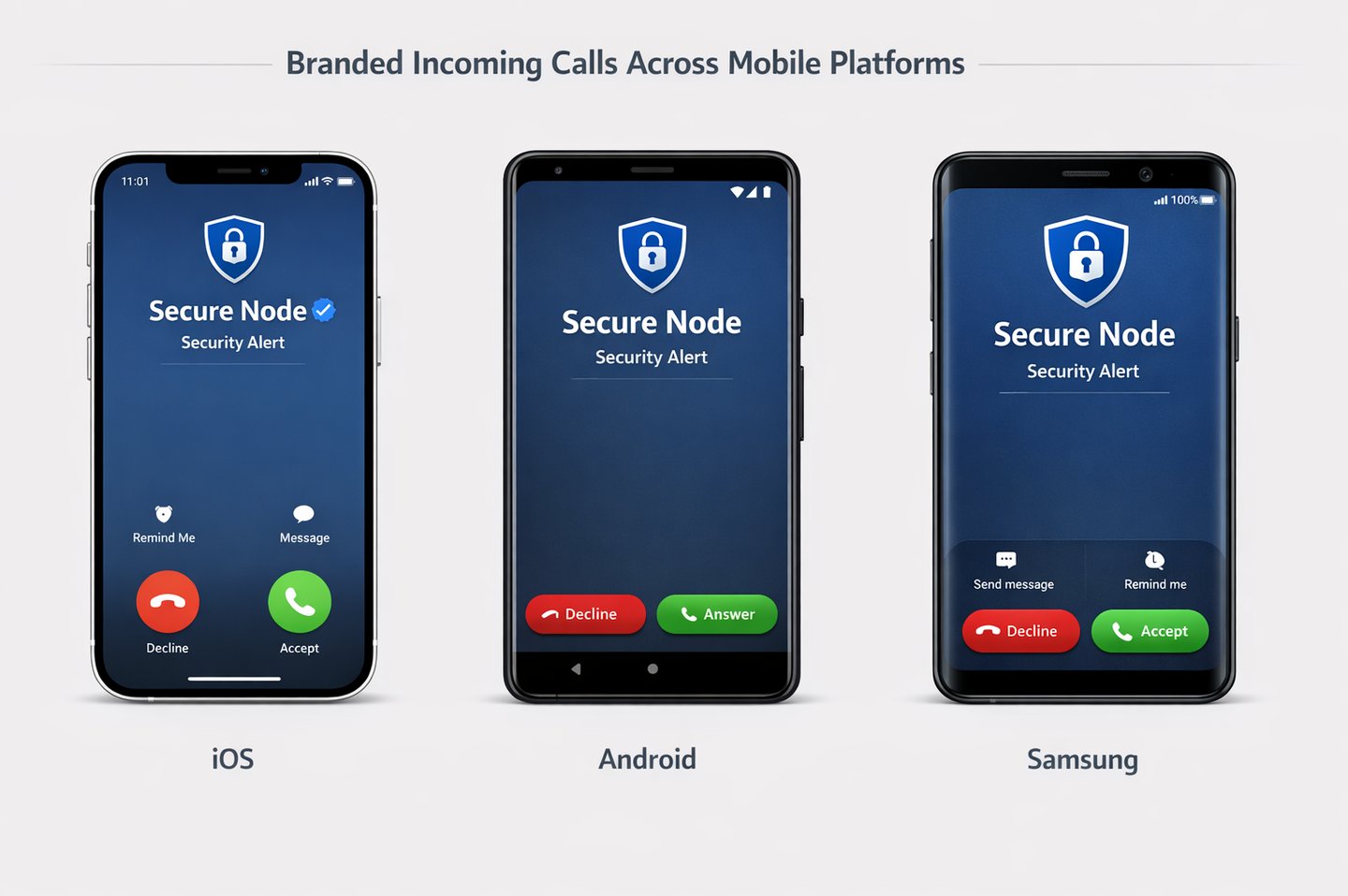
- Branded inbound caller identity for large outbound programs (contact centres, healthcare, logistics, fintech, utilities)
- Multi-app deployments where you control identity centrally but display it consistently on devices
- Privacy-forward identity delivery (minimal metadata, cached locally for instant display)
- Get portal access
- Create API keys for your client applications in the portal (API Access page).
- Download reference apps (optional) to validate the experience end-to-end:
https://verify.securenode.io/sdk#sdk-downloads
- Integrate the SDK into your mobile app(s):
- Your app authenticates using
X-API-Key. - Devices sync identity metadata and cache it locally for fast, offline-capable display.
- Your app authenticates using
- Roll out to production in stages (pilot → region/team → full deployment).
- Base URL:
https://verify.securenode.io - Auth: send
X-API-Keyon each request - Core endpoints: branding sync + lookup, and device register/update for device attribution/state
- Separate keys per app: treat API keys as per-environment and per-app credentials.
- Design for retries + offline: callers arrive when networks are unreliable; rely on sync + local cache for consistent UX.
- Operational ownership: align product, mobile, and security teams on what identity is displayed and when.
To discuss partnerships, integrations, or early access:
- Email: admin@securenode.io
- Web:
https://securenode.io
© SecureNode. All rights reserved.